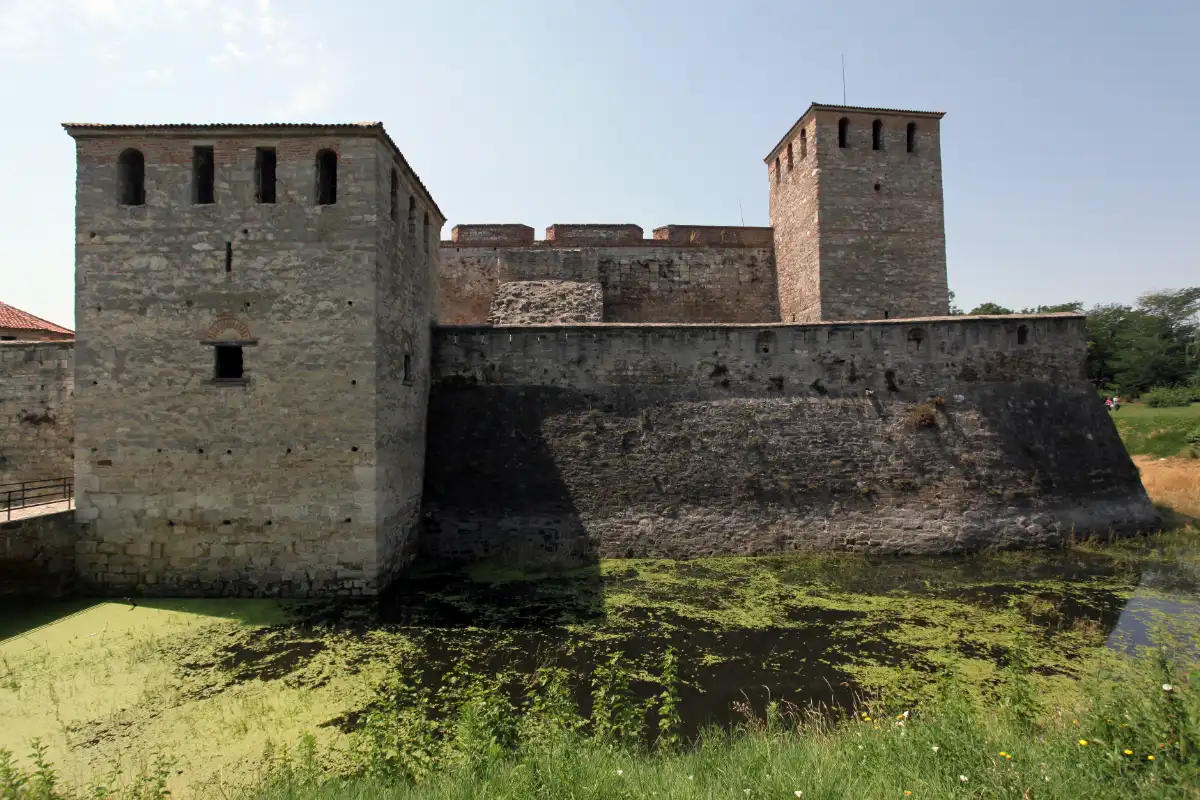
Majestically rising on the very bank of the Danube River in the northern part of Vidin, Baba Vida Fortress is not merely a historical site, but a living legend, woven into its stones with centuries of history, battles, and human destinies. In folk tradition, it is known as the “Towers of Baba Vida.” The legend tells of the boyar’s daughter Vida, who—having leaned from the unhappy marriages of her sisters Kula and Gamza—chose freedom and power. She built an impregnable fortress and devoted her life to its protection, becoming a symbol of strength, independence, and wisdom.
Behind this tale lies the real history of one of the best-preserved medieval defensive structures in Bulgaria. The fortress was built on the foundations of the ancient Bononia, and its Bulgarian construction began in the second half of the 10th century. Its most significant appearance was developed during the era of the Second Bulgarian Empire (late 12th–14th century), when Vidin established itself as an important political and military center.
With an area of 9.5 decares, together with the surrounding moat, which was once filled with waters from the Danube River, the fortress was truly impregnable. Access to it was provided by a drawbridge, and its defensive system included an inner fortress wall in the shape of an irregular quadrilateral, reinforced with nine powerful towers. Later, an outer defensive wall was also built, further strengthening its protection.
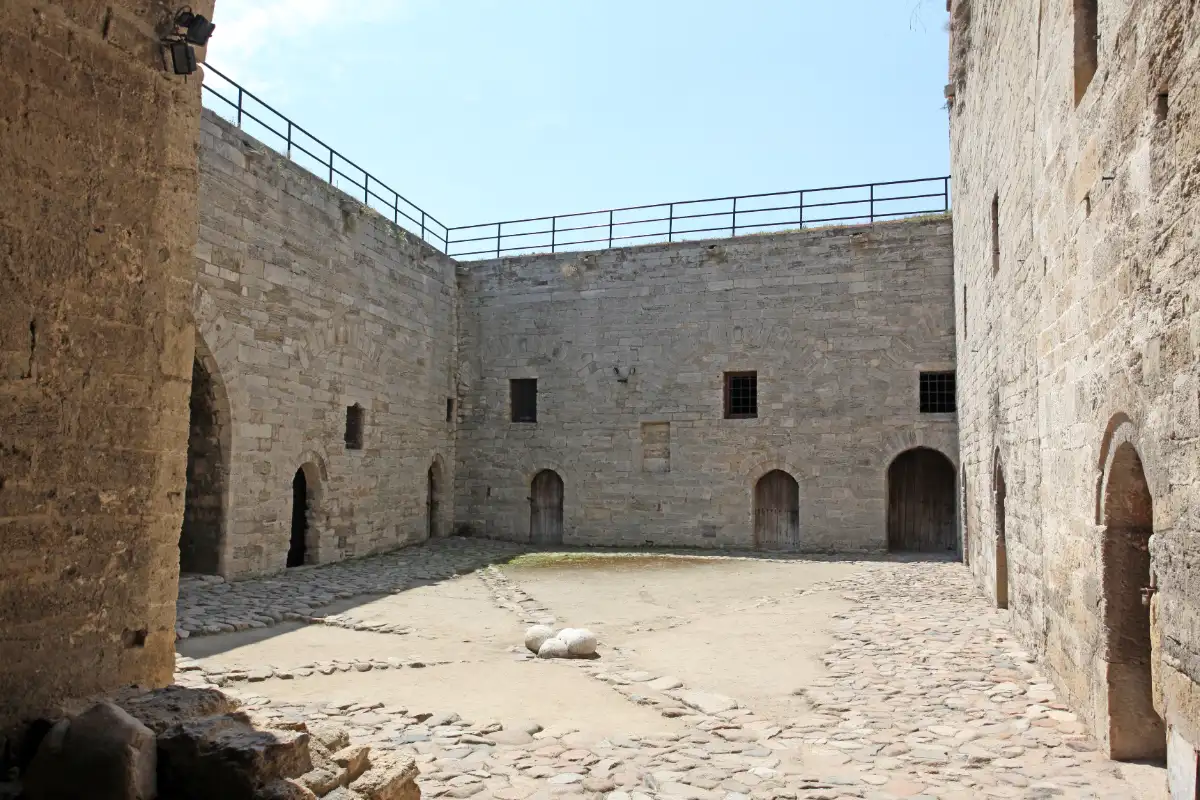
In the inner courtyard, the residential part of the fortress once stood, offering a view of the entire complex. Archaeologists have discovered the foundations of a chapel from the 13th–14th centuries, and the last Bulgarian medieval ruler, Tsar Ivan Sratsimir, lived here. His presence turned the fortress into one of the last strongholds of Bulgarian statehood in the Middle Ages.
During the Ottoman period, from the late 17th to the early 19th century, the fortress was adapted for the use of firearms. The stone halls were converted into ammunition and food storerooms, guard rooms, and a prison—new functions that changed, but did not erase, its defensive character.
After the Liberation, the fortress remained a military site with restricted access for a long time. Archaeological excavations carried out between 1956 and 1962 revealed cultural layers from the Roman, Byzantine, Bulgarian, and Ottoman eras. In 1958, it was opened to visitors, and in 1964 it was declared a cultural monument of national significance.
Today, Baba Vida Fortress is one of the most vibrant cultural spaces in Vidin. Its medieval walls serve as a natural backdrop for theatre performances, music events, exhibitions, and film productions.
A visit to the fortress is not just a walk among ancient stones—it is a journey through the centuries, an encounter with legends, rulers, and warriors, and one of the most powerful and memorable experiences for every visitor to the former capital city of Vidin.