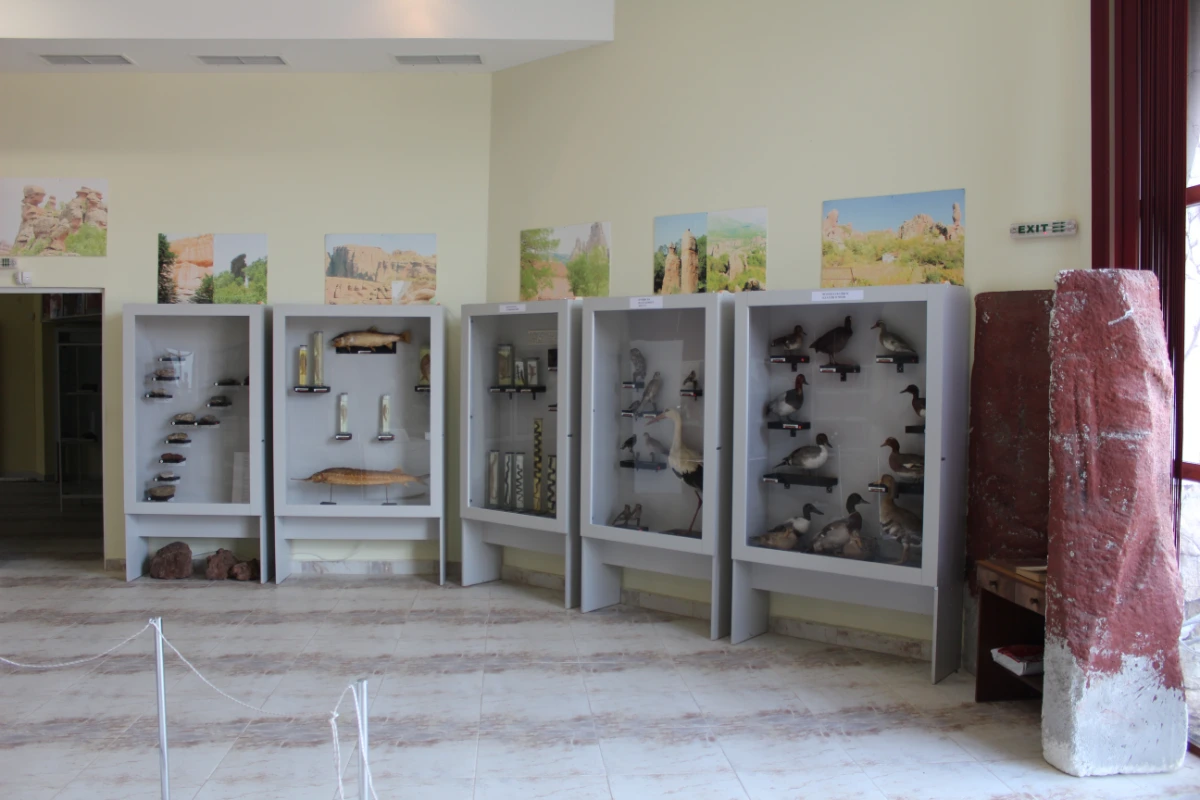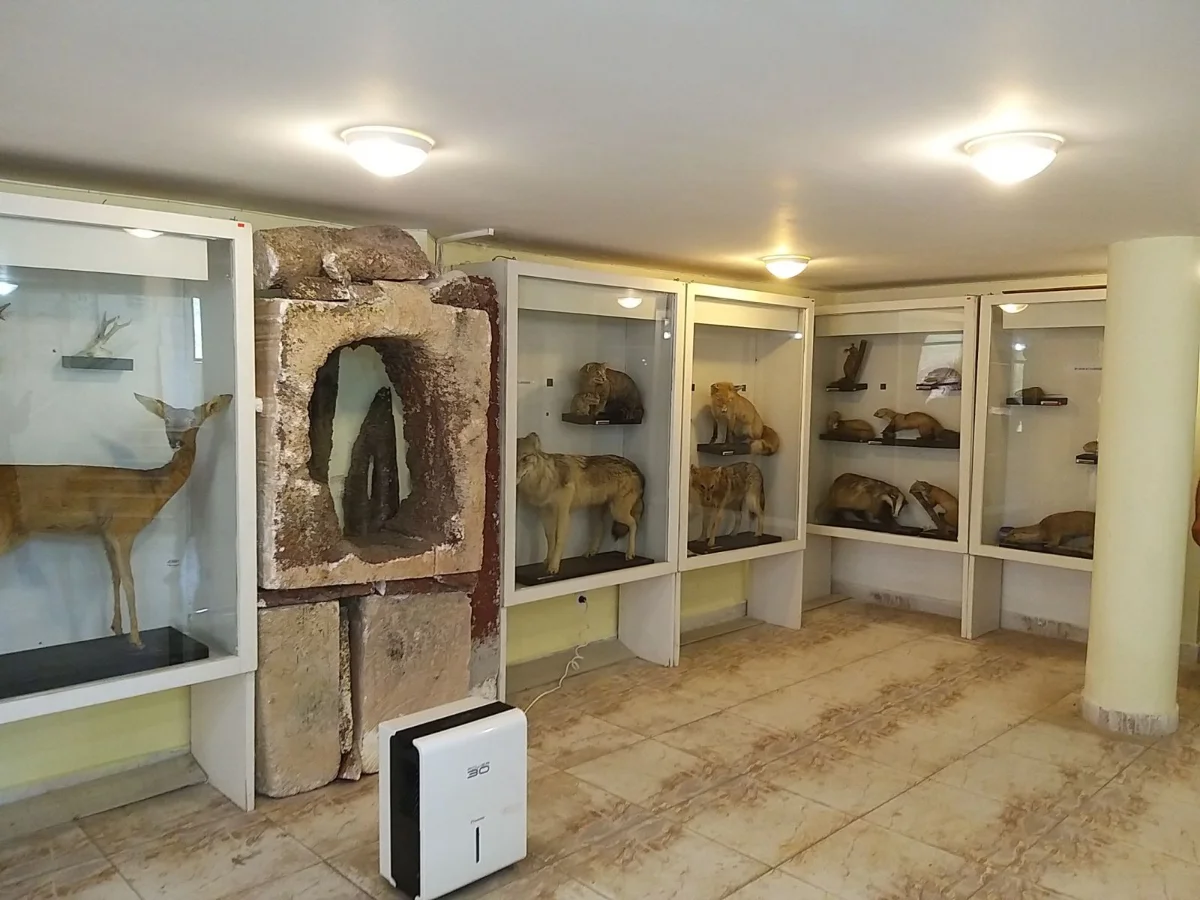
The Natural History Museum department was opened on 01.10.1975.
The museum is a permanent point of interest and attention both for tourists visiting the town of Belogradchik and for students in the region.
Frequent visitors include university students, graduates, and researchers who find photographic documentation, summarized data from field studies, and a rich collection of specialized literature here.
The museum exhibition is unique in North-western Bulgaria. From its very creation, the concept was not only to provide direct acquaintance with the flora and fauna of the region, but also to emphasize the ecological aspects of nature.
Currently, the exhibition contains 520 exhibits, while the museum collection holds approximately 2,500 additional items (about 3,000 in total). Among these, 39 are preparations of European and globally protected species included in the Bern Convention, and 128 exhibits (representing fauna and flora) have the status of endangered species according to the Biodiversity Act.
All this makes the collection extremely valuable. In a relatively small area, the department displays some of the most attractive representatives of the living and non-living nature characteristic of North-western Bulgaria, from past geological eras to the present day.
Among these are rock samples, preserved specimens of animals (insects, amphibians, reptiles, birds, and mammals), bird eggs, and herbarium plant specimens. In the exhibition halls, the exhibits are arranged according to an ecological principle (based on the biotope they inhabit), which helps visitors gain a clearer understanding of the relationships within nature.
The specialists of the department have developed engaging guided tours tailored to the age and interests of visitors, presenting interesting and curious aspects of the living world. The exhibition also includes photo panels displaying beautiful views of the unique natural landmark “Belogradchik Rocks.”
The museum preserves in its main and auxiliary scientific collections over 3,000 natural specimens and related materials, including minerals, rocks, and useful minerals; paleontological materials (bones of prehistoric animals such as the cave bear and cave hyena); zoological materials (mounted animals, skins, skulls); herbarium plant specimens; and original photographic materials, including photographs taken by museum staff.
Over the years, a rich library has been assembled, containing more than 600 titles of scientific-popular and specialized literature.
The scientific research activities of the “Nature” department focus on rare and endangered species of flora and fauna in North-western Bulgaria, as well as unique local endemic species.