The beginnings of museum work in Montana are associated with the archaeological society “Montanensium,” founded in 1937, whose chairman was the then mayor of the town of Ferdinand, Gozo Mitov. Unfortunately, the planned archaeological museum was never opened, despite the allocated premises and the credit approved by the Ferdinand Municipal Council.
The first museum institution in the town opened its doors in 1953 as a specialized “Museum of the September Uprising of 1923” (MSU) in the town of Mikhailovgrad.
In the 1970s, within the framework of the large structure of the Regional Directorate “Cultural and Historical Heritage,” various museum departments operated alongside the MSU, such as “Archaeology,” “Ethnography,” and “National Revival.” Meanwhile, the establishment of a Regional History Museum in a new, modern, purpose-built facility remained an unrealized goal.
In 1991, the Collegium of the Ministry of Culture adopted the decision of the Executive Committee of the Municipal People’s Council in Mikhailovgrad to restructure the city’s museum network. According to this decision, the Museum of the September Uprising was closed, and its building, together with all property, collections, and funding, was transferred to the newly established Historical Museum.
As a result of restitution processes, mainly during the second half of the 1990s, the museum lost a significant part of its exhibition spaces.
By Decree of the Council of Ministers No. 80 of April 7, 2006, the museum in Montana, like those in all regional cities, was granted the status of a Regional Historical Museum.
The Regional Historical Museum – Montana (RHM–Montana) is funded as a delegated state activity and functions as a secondary budget administrator.
The museum collections include and preserve over 60,000 registered movable cultural artifacts covering a wide chronological range—from the Chalcolithic (Copper-Stone Age) to the first decades of the 21st century.
The museum exhibitions are located in three main buildings, and since 2021 the Regional Historical Museum – Montana has officially provided guided tour services at the ancient and medieval fortress “Kale.”
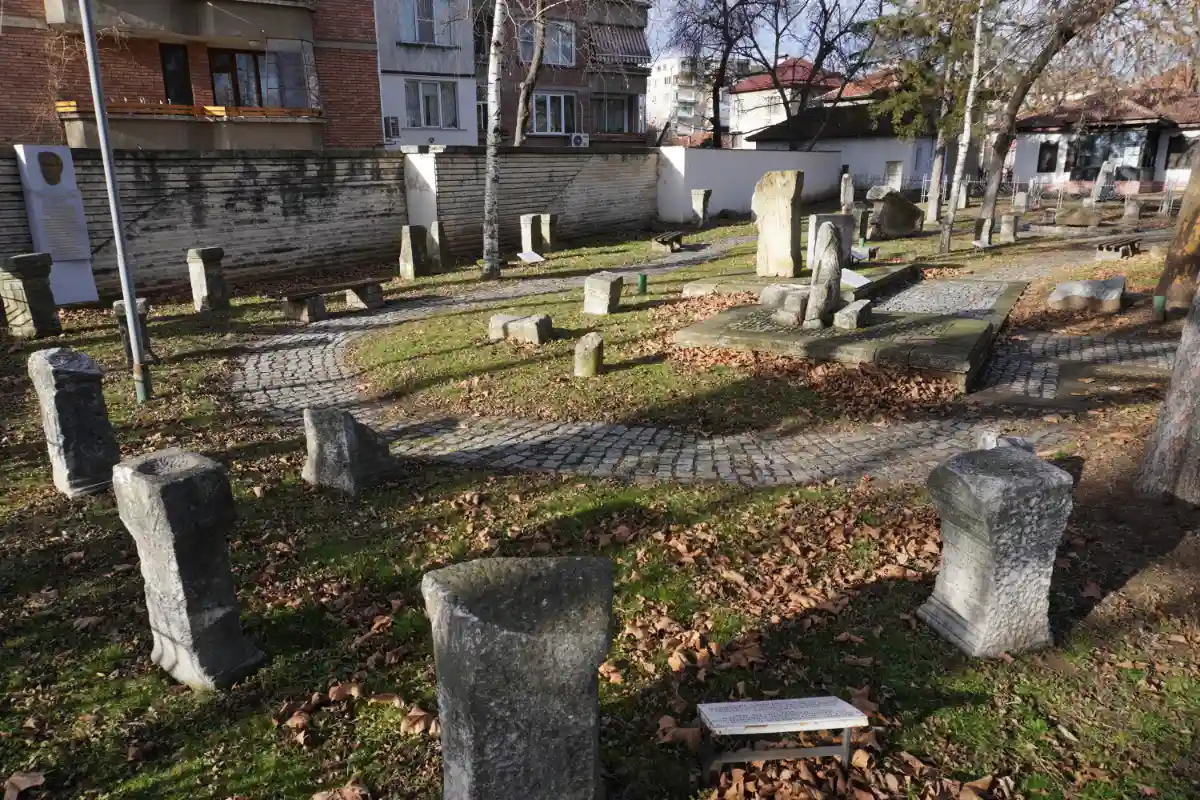
Among the most interesting exhibits are epigraphic monuments from the Roman era (stone inscriptions are the only written evidence of the ancient history of the town and the region); a replica of the Yakimovo Treasure; an original local treasure (belt appliqués and jewelry) dated to the 14th century; collections of icons, Chiprovtsi carpets, cameras, clocks, telephones, and a weapons collection.
In the so-called Mihaylova House, the typical urban and rural lifestyle of the region is presented.
In 2011, the Art Gallery “Kiril Petrov” was transformed into the Art Department of the Regional Historical Museum – Montana. The gallery’s rich collection includes works by classics of Bulgarian painting, world-famous contemporary artists, and local creators.
After 1878, the present-day town of Montana changed its name several times.
For the first time, this happened on November 2, 1891, when, by a princely decree, the village of Kutlovitsa was granted town status under the name Ferdinand.
In the drastically changed socio-political situation after the coup of September 9, 1944, a Council of Ministers decree dated March 1, 1945 renamed the town of Ferdinand to Mihaylovgrad.
In the ideological context of the “democratic changes” following November 10, 1989, a presidential decree dated March 18, 1993 changed the name of Mihaylovgrad to Montana.